
Now or Never: The Top 5 Reasons Manufacturers Should Invest in IT Infrastructure (2026 Update)
- Ciaran Roche
From the Internet’s birth in 1969 to the launch of the World Wide Web in 1993 and the Metaverse in 2023, humanity has experienced a rapid evolution in how we communicate and connect. The world’s connectivity revolution has also meant that businesses worldwide, including manufacturers, need to keep up in every way – from operating models to IT systems and, arguably most importantly, underlying enterprise IT infrastructure. Over the past four decades, this concentrated digital revolution has led to faster data transmission and the adoption of emerging technologies to meet the demands of modern life. However, it has also introduced significant challenges.
Manufacturing CIOs and Infrastructure and IT Operations (I&O) leaders are powering Industry 4.0 transformations and, ultimately, Industry 5.0 from behind the scenes. They are navigating a complex digital landscape filled with challenges related to IT infrastructure, finding themselves in the driver’s seat, needing to take the rest of the organization on the journey of integrating cutting-edge digital technologies like digital twins.
New technology is transformative but expensive
Manufacturers are accelerating technology adoption, and CIOs are advocating for more support and resources to drive the push, including significant updates to the digital infrastructure required to support these new advanced technologies. You only need to look at innovations like digital twins to see how they are revolutionizing shop floor operations, offering manufacturers significant gains in improved efficiency and cost savings.
Procter & Gamble is one example of a company ahead of the game. They exemplify the power of Industry 4.0 by successfully utilizing digital twins in one of their factories in China to improve warehouse operations, attaining 99.9 percent on-time deliveries, cutting inventory by 30 percent, and a 15 percent reduction in logistic costs within three years.
An industry analysis report found that the global market size for digital twins is expected to grow from USD 34 billion in 2026 to USD 385 billion in 2034 reflecting the explosive growth in efficinecy tools for manufacturing environments. By securing a larger budget, I&O leaders can more confidently address integration issues and cybersecurity threats and improve data management, all while maintaining cost efficiency despite a shortage of expertise.
Investments soaring to new heights in the digital infrastructure market
The numbers don’t lie, and right now, they suggest an infrastructure boom perpetuated by businesses that are working against the clock to support increasing IT infrastructure and network demands.
Gartner forecasts worldwide IT spending will exceed $6.08 trillion in 2026, growing 9.8% year-on-year, driven largely by AI infrastructure and data center expansion. Data center systems alone are projected to rise from $489 billion in 2025 to $582 billion in 2026, underscoring how enterprises, including manufacturers, are accelerating investment in the digital foundations required for Industry 4.0 and beyond.
The firm expects the global enterprise network infrastructure market will soar to USD$69.57 billion in 2024, up from last year’s USD$60.53 billion in 2023, as reported by ResearchAndMarkets.com. Many manufacturers are currently playing catch up with their transition to harness Industry 4.0 innovation, but they must prepare for the imminent arrival of Industry 5.0, or the era of leveraging data.
According to industry expert and Founder and CEO of the International Centre for Industrial Transformation (INCIT), Raimund Klein, the sector overall is still playing catchup to adopt Industry 4.0 strategies and still has work to do.
“There are several reasons why the manufacturing industry has not been able to achieve its Industry 4.0 goals, and one of the primary factors is not having a clear strategy or understanding of smart manufacturing journey progress. Before 2020, Industry 4.0 was more of an aspirational concept than an urgent focus, with adopting a strategy by 2019. By 2020, that number surged to 31 percent, and we think that number has doubled over the last five years.”
Additionally, Industry 4.0’s goals cannot be achieved without a robust IT infrastructure.
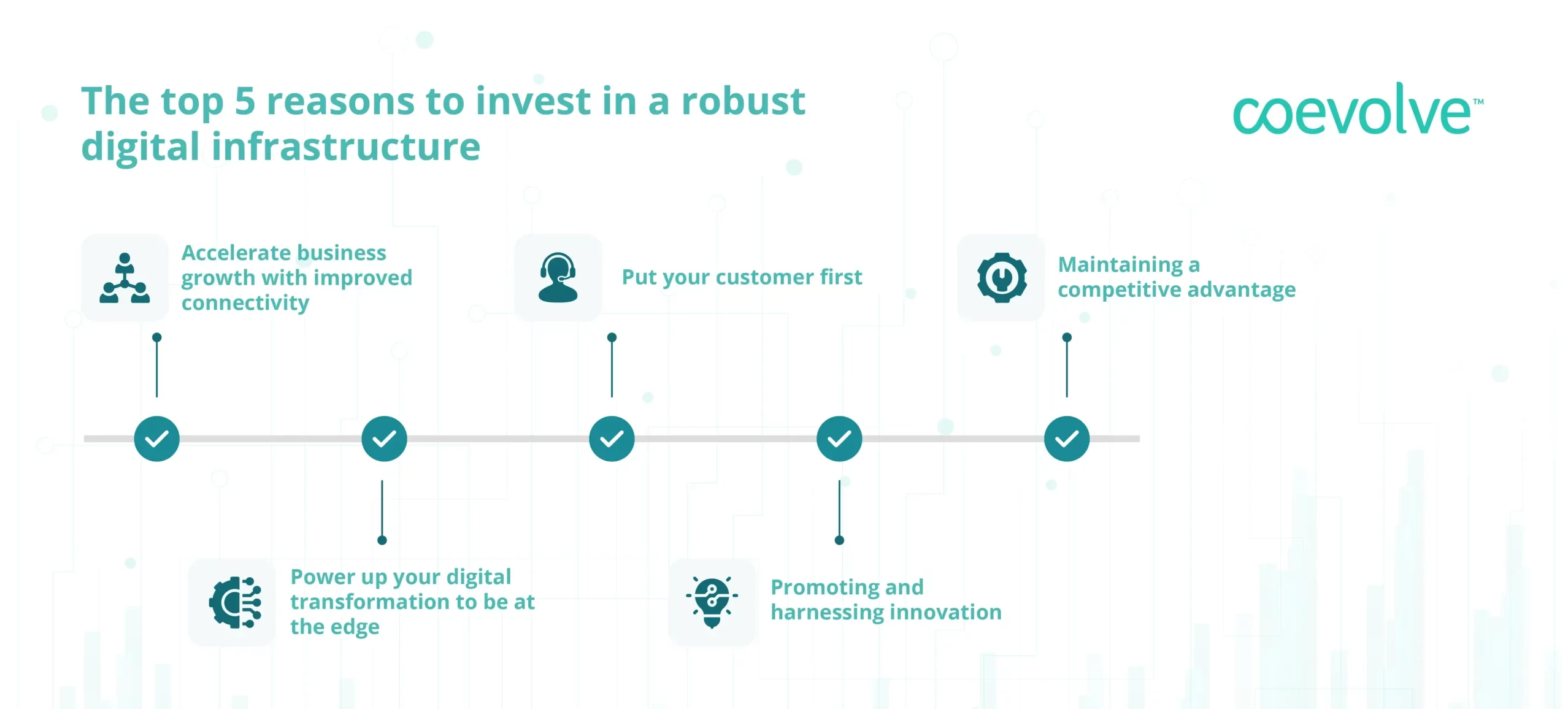
The top 5 reasons to invest in a robust digital infrastructure
1. Accelerate business growth with improved connectivity
An enhanced IT infrastructure enables improved business performance but also significantly improves connectivity, the backbone of our digitally dependent world. Gartner reports that it empowers businesses to leverage technology, such as SD-WAN, SASE, VPN, digital twins, and more, effectively paving the way for greater efficiency and success.
2. Power up your digital transformation to be at the edge
A flexible network will unlock new capabilities for leaders to turbocharge their digital transformation by streamlining operations, unlocking scalability, nurturing innovation, and augmenting overall efficiency. Key elements of IT infrastructure, such as edge underlay, cloud computing, data storage, network overlay, integrated security, and analytics layer, allow businesses to adopt business-critical tech.
3. Put your customer 1st
Imagine knowing your customers better than they know themselves. An improved IT infrastructure will allow for better data management and data extraction with the help of tech, such as predictive analytics, Internet of Things (IoT), and blockchain technology. Businesses can better understand customer needs, enhancing their satisfaction and loyalty.
4. Promoting and harnessing innovation
The name of the game in manufacturing is innovation, and by investing in a flexible, intelligent digital infrastructure, enterprises can trial new tech and solutions, such as digital twins, robotics, and automation, with less disruption to existing operations. As manufacturers advance their digitization efforts, prioritizing innovation within their business strategies is essential.
5. Maintaining a competitive advantage
Investing in your digital infrastructure now is like buying an insurance policy. Enterprises can ensure that they are future-ready with the right-fit infrastructure that will carry them forward for the next ten or more years and into the age of Industry 5.0. All of the newest solutions mentioned above have merit but must have an agile infrastructure to be implemented.
What’s around the corner – the transformation of the manufacturing digital backbone
In summary, a change is afoot in terms of the status quo of manufacturing digital infrastructure. Times have changed from localized operations to manufacturers operating in a much more interconnected, global environment, demanding enhanced connectivity supported by a resilient IT infrastructure to harness the power of digital transformation.

“In an era where data-driven operations and advanced automation define manufacturing success, investing in a resilient IT infrastructure isn’t just a technical upgrade - it’s a strategic imperative. As technology advancement accelerates and Industry 5.0 looms, manufacturers must act now to fortify their digital backbone. Those who invest today, with a clear strategy, won’t just keep pace with Industry 4.0, they’ll lay the groundwork for true innovation and agility as we enter the Industry 5.0 landscape.”
- Ciaran Roche, CTO, Coevolve.
Remaining competitive in today’s disruptive manufacturing environment requires forward-thinking CIOs and always thinking ahead. To support next-generation progress, the technological infrastructure lying beneath critical applications and platforms must be robust and future-proof, aligned with business and strategic planning. To learn more about how we can help and the critical nature of digital foundations in the age of Industry 4.0, read our whitepaper or contact us.