

Global Connectivity in an era of AI
and disruption
Global growth is on the agenda for leaders as they futureproof their businesses in an era of disruption and change. But challenges persist when trying to achieve global connectivity. Explore our Global Business Connectivity Outlook Report for the latest insights from leaders on navigating global growth and connectivity in 2025-26.
Message from CEO
In our inaugural Global Business Connectivity Outlook Report, which you can download here, we interviewed 50 senior business leaders to assess their sentiments regarding international expansion, the challenges and opportunities it presents, the role of emerging technologies, and the risks of clinging to traditional telecommunication connectivity and network models.
The research reveals a powerful opportunity for global growth among many businesses. Connectivity – a key enabler of business growth – needs to be top of the agenda for leaders. By embracing connectivity and tapping into new, emerging markets and innovative product lines, enterprises can protect themselves against competition and drive strategic growth.
We know that global connectivity is a catalyst for positive change and staying ahead in the market. However, according to the report’s data, global connectivity is often not viewed as a business enabler and is frequently overlooked by business leaders. This gap in priorities requires the urgent attention of leaders; especially with international business expansion on the rise. In fact, almost three-quarters of the interviewed leaders (70 percent) said that enhancing global connectivity is a must-have on all business agendas for 2025-26.

Tim Sullivan
Co-Founder and CEO of Coevolve
See our CEO, Tim Sullivan speak to Ticker News on the Global Business Connectivity Outlook Report results.
Global growth and connectivity: mind the gap
Our survey highlights a striking disconnect between the critical role of global connectivity and its visibility within organizations. While 65 percent of leaders recognize connectivity as very important at the enterprise level, 22 percent report it is only occasionally discussed, and 13 percent say it is not very visible. This gap appears to stem from a lack of understanding of what global connectivity truly involves and how it underpins compliance, technology, and security across international operations. Businesses without strategic attention and deliberate planning face increased regulatory risk, technology bottlenecks, and greater exposure to security threats when scaling globally, amplifying the very challenges that keep leaders awake.
The disconnect between the role of global connectivity vs. its prioritization presents a significant risk, especially in today’s digital economy, where business continuity, customer experience, and revenue are increasingly tied to ‘always-on infrastructure’. The real challenge isn’t just technical – it’s strategic. Recognizing that robust, scalable global networks are no longer a support function, but a foundational enabler of growth, resilience, and competitive advantage.

Ciaran Roche
Co-Founder and CTO of Coevolve
The report’s key highlights





01
Leaders called to have strong foundations in place to adapt quickly.
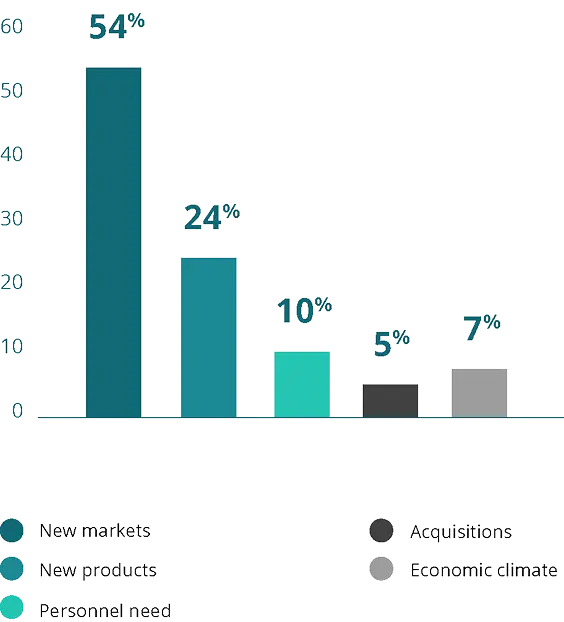
Business leaders are increasingly thinking and acting globally. Our Global Business Connectivity Outlook Report reveals that more than 70 percent of surveyed leaders intend to expand outside their current location next year, with 40 percent actively pursuing growth. These findings indicate that global expansion is a high priority across multiple industries. Conversely, only 27 percent of respondents do not plan to expand globally in the next 12 months.
These findings tell us that global growth is not slowing down anytime soon. Rather, it is accelerating – especially as conventional business cycles change – prompting leaders to think outside the box and consider innovative growth strategies. Leaders must also be fearless in exploring their best options, while taking calculated risks to stay ahead.
02
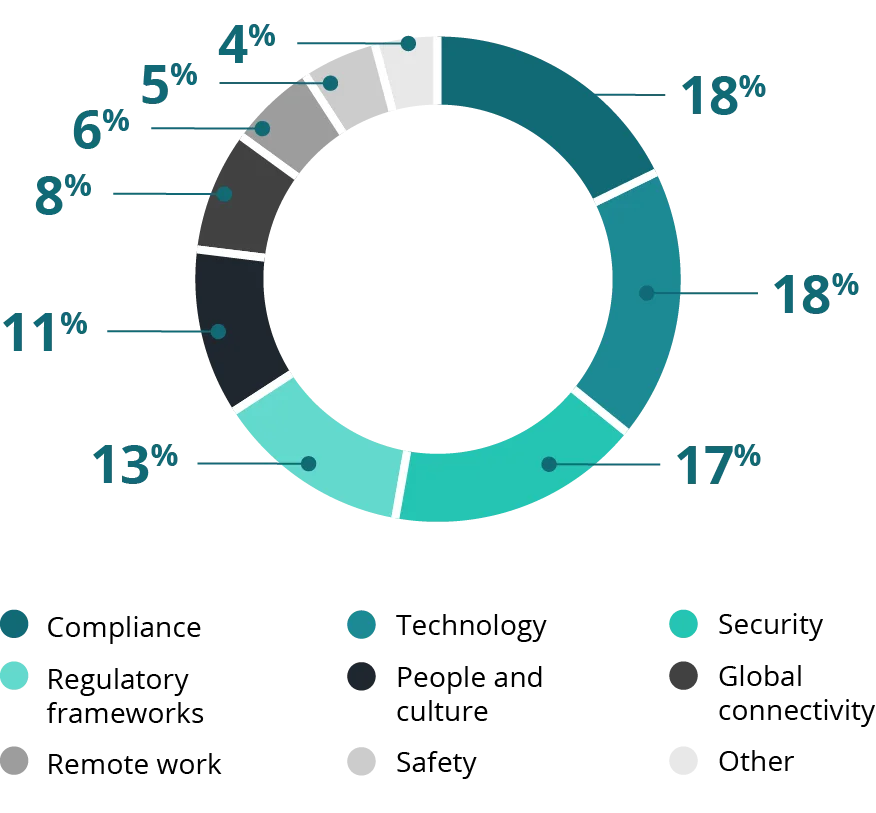
Compliance, technology and security are the top three challenges keeping leaders awake.
Almost half of the leaders we interviewed (40 percent) face multiple challenges when expanding internationally, with compliance (18 percent), technology (18 percent), and security (17 percent) emerging as their top concerns. These areas can also be exacerbated by business scaling, which involves navigating complex regulations, managing evolving technological needs, and addressing heightened security risks.
Security remains a particular point of tension. Despite being a top concern, it often takes a backseat in technology strategy and investment decisions, with AI dominating theconversation. Yet as enterprises scale across borders, protecting sensitive data and maintaining continuity across hybrid workforces and multiple locations is increasingly important. As a result, security needs to be at the top of the strategic agenda.
03
A growing disconnect between practical solutions for global growth and chasing after the latest trend.
AI continues to dominate boardroom conversations and IT investments, accounting for about 45 percent of their overall technology investment budget on average. Cloud technology closely follows, accounting for about a third of the tech budget for many organizations. Meanwhile, 5G, multi-cloud solutions, and network security receive minimal attention, despite their critical role in enabling global operations.
Our survey also revealed that 31 percent of leaders identify AI as the highest priority for technology investment, followed by cloud computing at 24 percent, and optimized network architecture principles at 19 percent. Despite network security being a crucial focus for leaders, security ranks last, highlighting a significant disconnect between enterprise priorities and the urgency of security investment.

In an era where agility, resilience, and innovation define competitive advantage, the enterprise network determines how effectively your business operates, scales, and transforms. Advanced capabilities like AI, edge computing, and cloud services can only deliver their full potential when built on a robust, adaptable foundation. Without rethinking the architecture beneath these innovations, organizations risk creating fragile ecosystems that hinder growth and expose vulnerabilities. The future isn’t just about adopting new technologies, it’s about engineering the infrastructure that makes them thrive.

James Halberstadt
Managing Director EMEA, Coevolve
04
Ambiguity surrounds global connectivity. What is it, and what is the impact if it’s not prioritized?
Global connectivity is the backbone of modern business; yet many leaders remain unclear about its critical role. While it underpins user experience, operational efficiency, and business continuity, our survey reveals a disconnect between perception and prioritization. Only 55 percent of leaders say high-performance connectivity is fundamentally critical, while 35 percent consider it moderately vital, and 10 percent see it as unimportant.
This ambiguity has consequences. Without reliable, low-latency connectivity, enterprises risk bottlenecks in cloud and AI applications, frustrated users, and disrupted operations, which threaten their global growth ambitions.
Fortunately, enterprises are taking steps to improve connectivity, from reviewing current systems to enhancing IT infrastructure and adopting SD-WAN for streamlined, global cloud deployments. However, our data shows that many leaders only realize the importance of connectivity when it fails. By taking a proactive approach and investing in robust networks and adaptive solutions like SD-WAN now, businesses canmeet demand head-on and propel future growth.

Moving from legacy tech to pure software-defined models has led to a knowledge and skills gap that an individual enterprise now finds it hard to fill.
This is driving a shift toward specialized partners who can bridge that gap with automation, analytics, and real-world operational experience.
Tim Sullivan
Co-Founder and CEO, Coevolve
05
Agility, flexibility, collaboration, and a mix of both global and regional strategies are key to global growth.
High-performance growth relies on networks that are agile, flexible, and resilient, supported by strong executive collaboration. Our survey reveals that just over half of leaders (56 percent) describe their current network as very flexible, 22 percent moderately flexible, and 22 percent inflexible, highlighting a significant gap in readiness for global expansion.
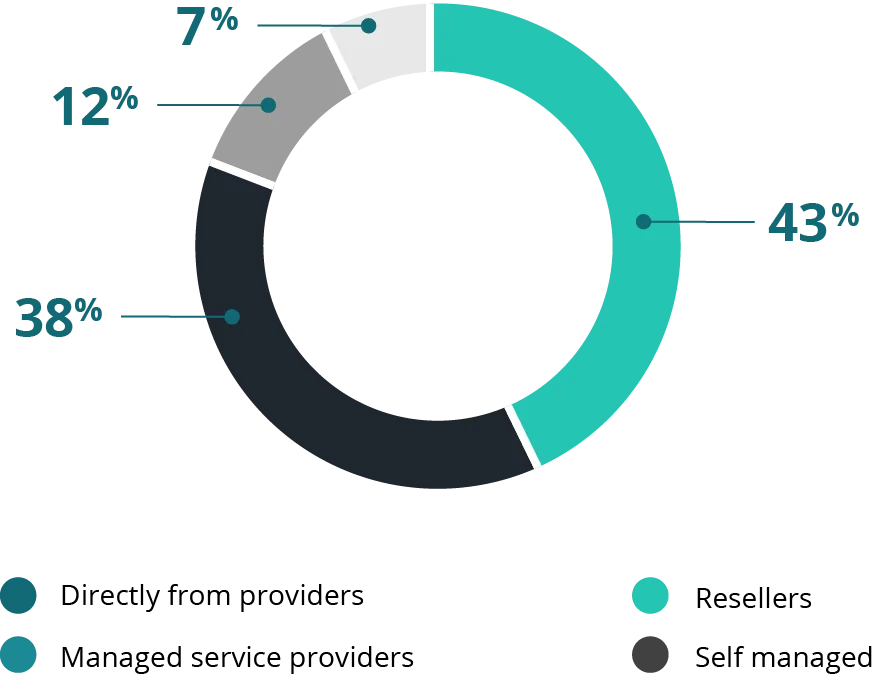
The Managed Services Provider (MSP) market is set to grow from $258 billion in 2023 to $520 billion by 2032, reflecting an increasing reliance on external partners to improve efficiency, enhance security, and expand across regions. Close collaboration among executives is key to making sure connectivity investments support overall business objectives.
This is not a one-person job. Ensuring your business has robust connectivity globally requires collaboration between CIO, CEOs, IT teams and boards. CEOs should think like an innovation designer, not a tech shopper. This mindset can help ensure an alignment between emerging technology, AI, modern IT infrastructure and global connectivity is required.
Tim Sullivan
Co-Founder and CEO, Coevolve
Our advice to leaders on getting connectivity right as you expand globally
Investments in flexible networks and modern solutions, such as SD-WAN, enable enterprises to adapt bandwidth dynamically, streamline regional deployments, and support cloud-native, high-demand applications – all of which are vital for expanding and connecting globally. Collaboration combined with leadership enables businesses to scale globally, safeguard ROI, and future-proof operations. Without this foundation, companies risk inefficiency, poor user experiences, and stalled growth in an increasingly connected world. So, what can you do?
1. Assess, align and collaborate
Start with a thorough assessment of systems, architecture, processes, and personnel. Align digital and IT initiatives with your current stage of global expansion and key business objectives. Foster a culture of collaboration across teams to break down silos and maximize the benefits of prioritized global connectivity.
2. Think global, act local
Adopt an agile mindset while balancing global standardization with local execution. Regional teams should have deep knowledge of local regulations, market requirements, and cultural nuances, enabling effective strategy deployment across diverse markets.
3. Embrace agility and flexibility
The business landscape is dynamic, particularly in emerging markets. Leaders must be ready to adapt IT and digital strategies quickly, combining global and regional approaches, while ensuring ongoing communication and collaboration across operations, IT, growth, and HR functions.
4. Leverage right fit partners
Managing global operations independently is challenging. Engaging the right-fit partners early allows them to advise on expansion strategies, IT, and connectivity, ensuring a smoother transformation journey.
5. Elevate connectivity conversations
A connectivity-first mindset is critical for global success. Leaders must ensure reliable, future-proof connectivity, mobilize the organization around this goal, and prepare for emerging technologies and shifting market conditions.