

Key priorities for the modern CIO
Who is this Discussion Paper for?
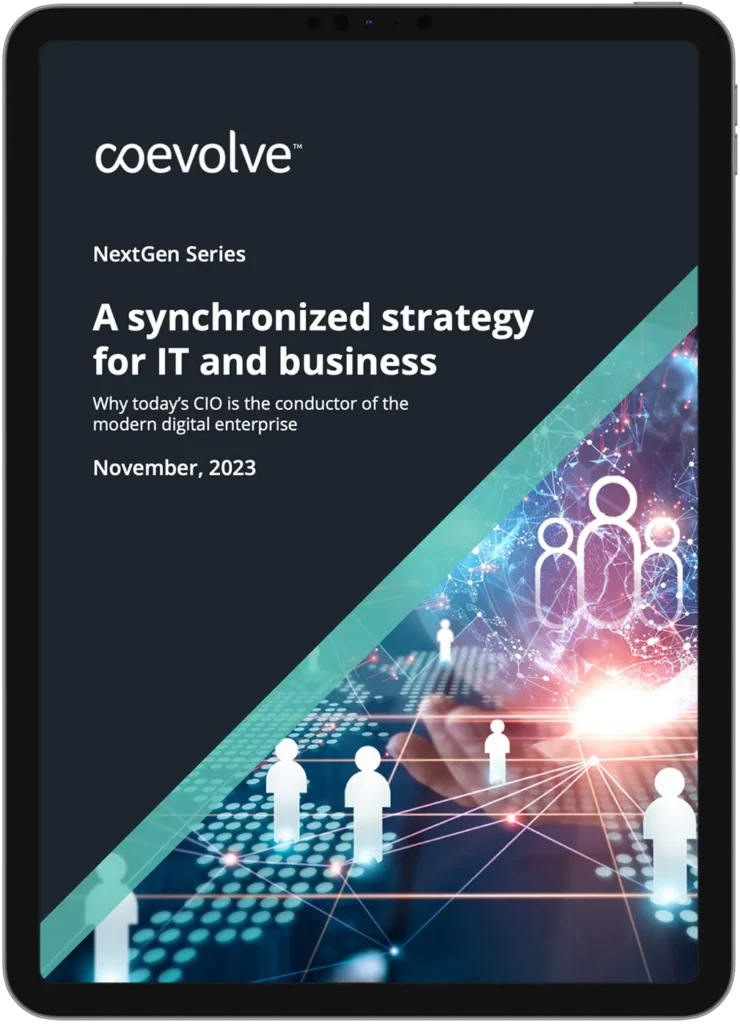
CIOs and IT leaders who want to be more people-led in their business approach and prioritize a synchronized digital culture across the enterprise.
Challenges you’re facing:
- Rapid technological change is disrupting your enterprise, with cybersecurity risks and compliance challenges wreaking havoc
- The overwhelming responsibility of aligning data with business vision is on your shoulders, with huge pressure and high-performance demands
- At every level of the enterprise, it’s a struggle to balance business-savviness with technical application, and people and culture are neglected along the way
What you’ll learn in this Discussion Paper:
- The vital importance of strong leadership, culture, and collaboration in remaining agile
- Key advice and tips for CIOs and IT leaders to hone business acumen and respond more effectively to digital disruption in the modern age
- Strategies for aligning technology implementation with robust infrastructure and a smart business vision to remain innovative
- Insights on why a CIO must set the tone for necessary cultural and organizational shifts and digital transformation initiatives
Request download

“The role of the CIO has evolved dramatically over the past few years, to include the regulatory side of things and staying up to date with technology advancements and business requirements. On top of this, it’s now the CIO that must put their hand up and flag any issues.”
FAQs
Why is a synchronized strategy important for IT and business success?
A synchronized strategy is a fundamental foundation for achieving successful outcomes across IT teams and business metrics. The business strategy is important because it lays out the groundwork for people and culture to adapt to digital disruption and remain agile.
Why is the role of the CIO vital to effective digital transformation?
The CIO is the conductor of the modern digital enterprise, with the ability to combine strong leadership skills, business vision, and technical know-how to drive effective digital transformation. Through clear communication and ongoing collaboration, the CIO plays a vital role in sustainable change management to help their business elevate performance.